

AEO is SEO: What Businesses Need to Understand
This is Jared with BlinkJar Media, and I need to get something off my chest.
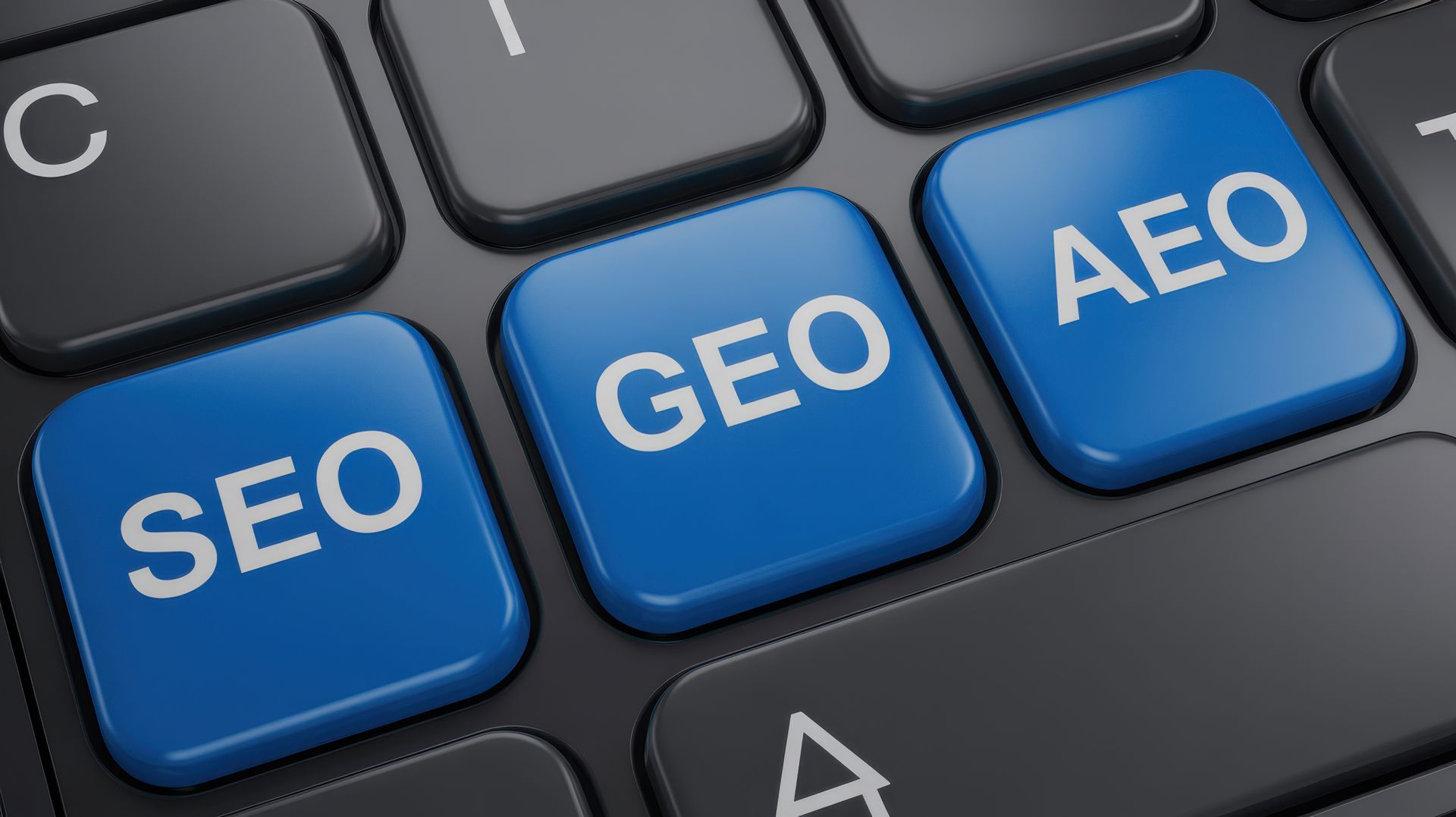
SEO is AEO. AEO is SEO. They are the same.
The names may describe different platforms or ways an answer appears. Still, they all try to accomplish the same thing through the same foundational work: helping useful, trustworthy information get found, understood, and surfaced when someone searches for an answer.
Different acronym. Different interface. Same goal. Same work.
You cannot succeed at one while ignoring the work required for the others. Anyone telling you differently is either misinformed or trying to sell you something.
Phew. I feel so relieved now that I said it.
Before anyone mistakes this for resistance to AI, let me be clear: I love AI. I use it, study it, teach it, and help businesses prepare for it. BlinkJar was writing that artificial intelligence was coming way back in 2016. It's hard to believe that was ten years ago.
Since then, we have written about leveraging the power of AI in marketing, prepared businesses for AI and the future of search, and became the first local Baton Rouge marketing agency to publish an AI Manifesto.
Many members of the BlinkJar team, including me, have completed professional training in AI and answer engine optimization. That includes the Piloting AI Professional Certificate from SmarterX and the Marketing AI Institute, as well as HubSpot’s AEO Fundamentals Certification.
I also speak to marketing students at LSU’s E. J. Ourso College of Business every semester about AI in marketing.
So, please, do not misunderstand my frustration. I understand AI. I believe in AI. I pride myself on staying one step ahead of where marketing is going.
What I do not understand is why we are suddenly pretending AI erased everything we already knew about search.
Let’s all stop.
Is AEO Replacing SEO?
AEO is not replacing SEO. It relies on the same fundamentals.
We previously explained how SEO and AEO work together to drive visibility, but I'd like to take that argument further: they don't simply work together. They are built on the same foundation and are trying to accomplish the same thing.
At BlinkJar, we take each client's overall content and optimization strategy and weave the fundamentals of SEO and the latest guidelines for AEO together. We do not treat them as separate methodologies, because they are not. Helpful content, technical performance, credible authorship, reviews, links, brand authority, original experience, and E-E-A-T all help search engines and AI platforms decide which businesses to trust and include in their results.
We recently analyzed marketing data across more than 30 clients at BlinkJar over the previous 12 months to see where leads were actually coming from.
- Traditional organic search accounted for nearly 62% of all leads
- AI platforms and large language models accounted for about 1.2%
So, should we abandon the 62% to chase the 1.2%? I think the answer is pretty obvious.
That does not mean the 1.2% should be ignored. If consumer behavior is shifting, we absolutely need to pay attention.
But adapting to a new channel is very different from abandoning one that is already producing results. This is not an either-or decision.
AEO is SEO applied to the way people now search and receive answers. As we explained in AI and the future of search, customers are not abandoning traditional search. They are expanding how and where they look for information, recommendations, and answers.
Calling AEO a replacement for SEO is like calling guacamole “deconstructed avocado purée” and charging $18 for it. You are still eating the same dip.
The presentation changed. The ingredients did not.
Can AEO Work Without SEO?
AEO cannot succeed without the fundamentals of SEO. There are many AI misconceptions in marketing, but this is not one of them.
AI platforms still need to discover your website, understand your content, connect your business to relevant topics, and decide whether your information deserves to be trusted.
AEO and SEO require the same foundational elements for success:
- A technically sound website with a clear structure
- Useful, original content that answers real questions
- Strong internal links and topical authority
- Credible authors with relevant experience
- Accurate and consistent business information
- Positive reviews and customer proof
- Quality backlinks and trusted mentions across the web
That is not a revolutionary AEO checklist. That is foundational search optimization.
Clients do not need separate SEO and AEO strategies. They need one clear plan that answers real questions, proves the company’s expertise, and makes the business easier for both people and platforms to trust.

What Is an Example of SEO Supporting AEO?
AI platforms need strong search and trust signals before they can confidently recommend a business.
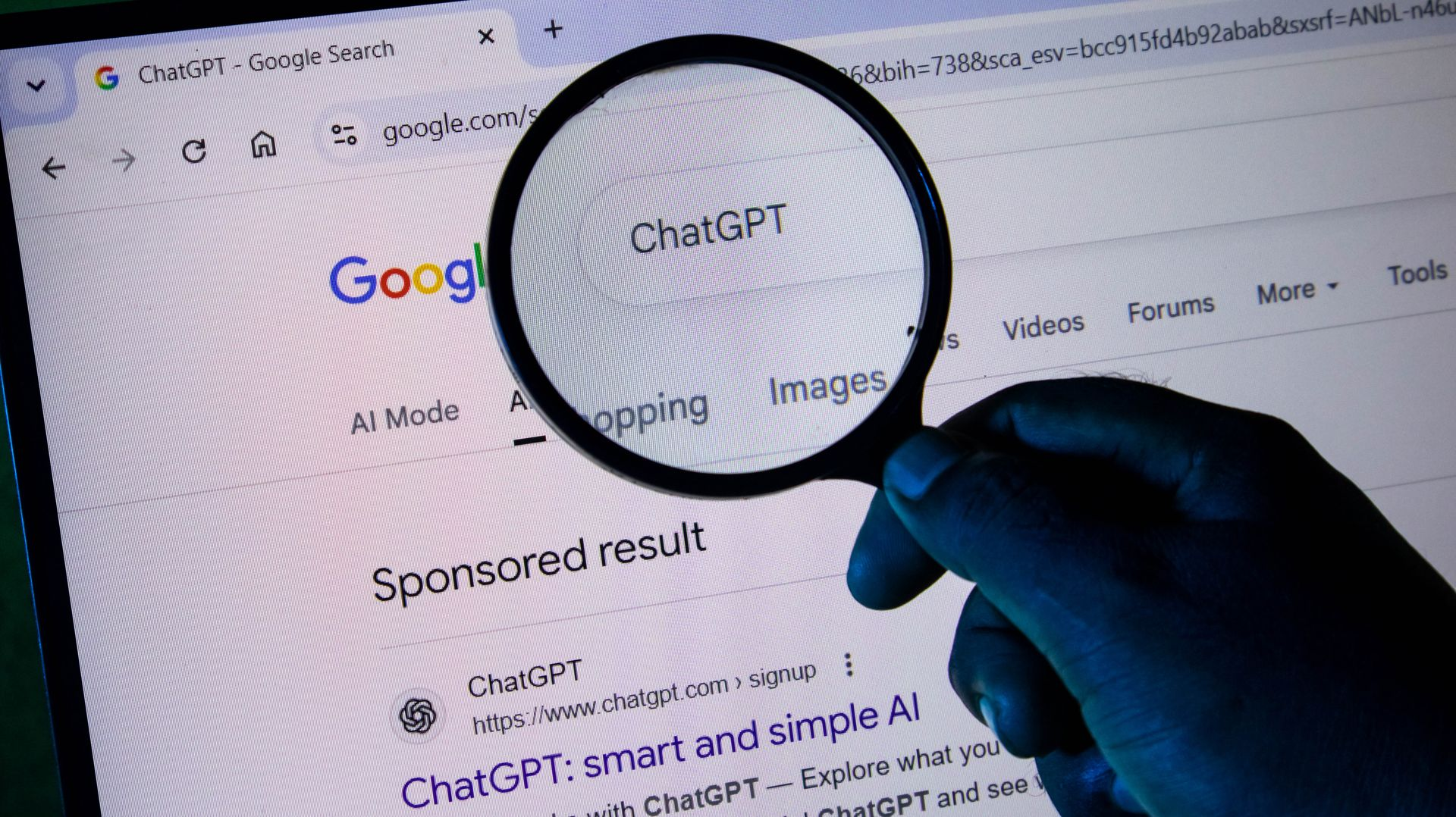
Imagine someone asks ChatGPT, Perplexity, or Google, “Who is the best commercial HVAC contractor in Baton Rouge?”
The platform does not invent a company. It looks for evidence across the web, including the contractor’s website, Google Business Profile, service-area content, online customer reviews, local citations, backlinks, and mentions from credible sources.
A contractor with a weak website, inconsistent information, few reviews, little useful content, and no local authority gives the platform very little evidence to work with.
Without that foundation, the answer engine may not know the business exists.
That is why telling companies to abandon SEO for AEO makes absolutely no sense.
How Does E-E-A-T Affect SEO and AEO?
E-E-A-T helps search engines and AI platforms determine whether your business and its content deserve to be trusted.
We have been explaining how E-E-A-T helps businesses rank on Google for years.
Want to know a secret the so-called AEO experts are not telling you? Large language models rely heavily on the trust signals created through E-E-A-T. Funny how that is just like SEO, right?
Real experience, qualified people, client results, positive reviews, credible links, and third-party recognition show that your business knows what it is talking about and deserves to be included in the answer. It is all about building trust. It always has been, and it always will be.
Trust is what earns visibility in SEO. It is also what earns citations and recommendations in AEO.
Different interface. Same foundation. Same goal.
AI visibility does not come from flipping a switch. It comes from doing the foundational work: improving the website, creating useful content, strengthening credibility, and giving every search platform clear reasons to surface the business.

Why Do Some AI Experts Say SEO Is Dead?
These new self-appointed AI experts want you to think SEO is dead, because a shiny new acronym is easier to sell than years of foundational SEO work.
AEO sounds new and looks impressive in a presentation. It allows someone to walk into a room and act as though everything a business previously invested in is suddenly obsolete.
But there is no magic trick here.
You do not abandon technical SEO because people use ChatGPT. You do not stop creating helpful content because Google introduced AI Overviews. You do not ignore site structure, authorship, links, reviews, citations, reputation, or firsthand experience because someone added “AI expert” to a LinkedIn headline.
You strengthen those fundamentals. That is how you improve visibility in traditional search and AI-generated answers.
The real question is whether the latest AEO wizard is willing to roll up their sleeves and handle the not-so-glamorous work of improving website structure, strengthening authorship, collecting customer proof, earning credible mentions, fixing technical issues, and creating content rooted in real experience.
Ironically, this is where the real magic happens.
What Should Businesses Understand About SEO and AEO?
Businesses should understand that SEO and AEO rely on the same foundational work to make their company visible, credible, and trusted wherever people search for answers. The terminology may be changing, but the work required to earn visibility and trust remains the same.
No matter what you call it, the overall goal is the same. Someone searches for information. A platform finds and evaluates potential sources. It surfaces the information it considers relevant and trustworthy. A customer discovers the answer.
Whatever you call that process, your business still needs to be optimized to be found, understood, and trusted.
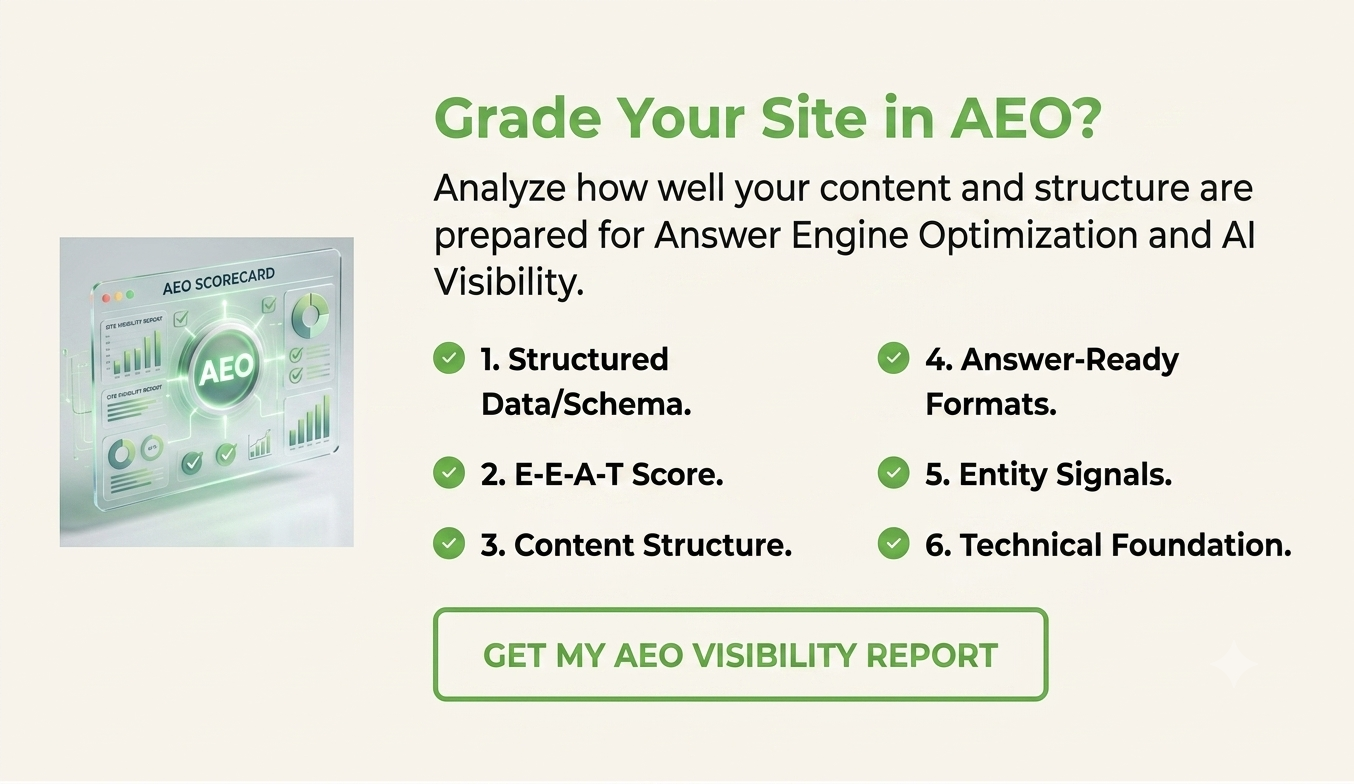
If you are unsure how your current strategy supports visibility in AI-driven search, run an instant AI visibility audit or contact BlinkJar Media. We will take an honest look at what is already working for your website, identify where your digital presence can improve, and strengthen the foundation supporting traditional search and AI-generated answers.