

The Fragmentation of Search: Why Being Found Is No Longer Just About Google
Your customers are still searching. They are just no longer searching in one place.
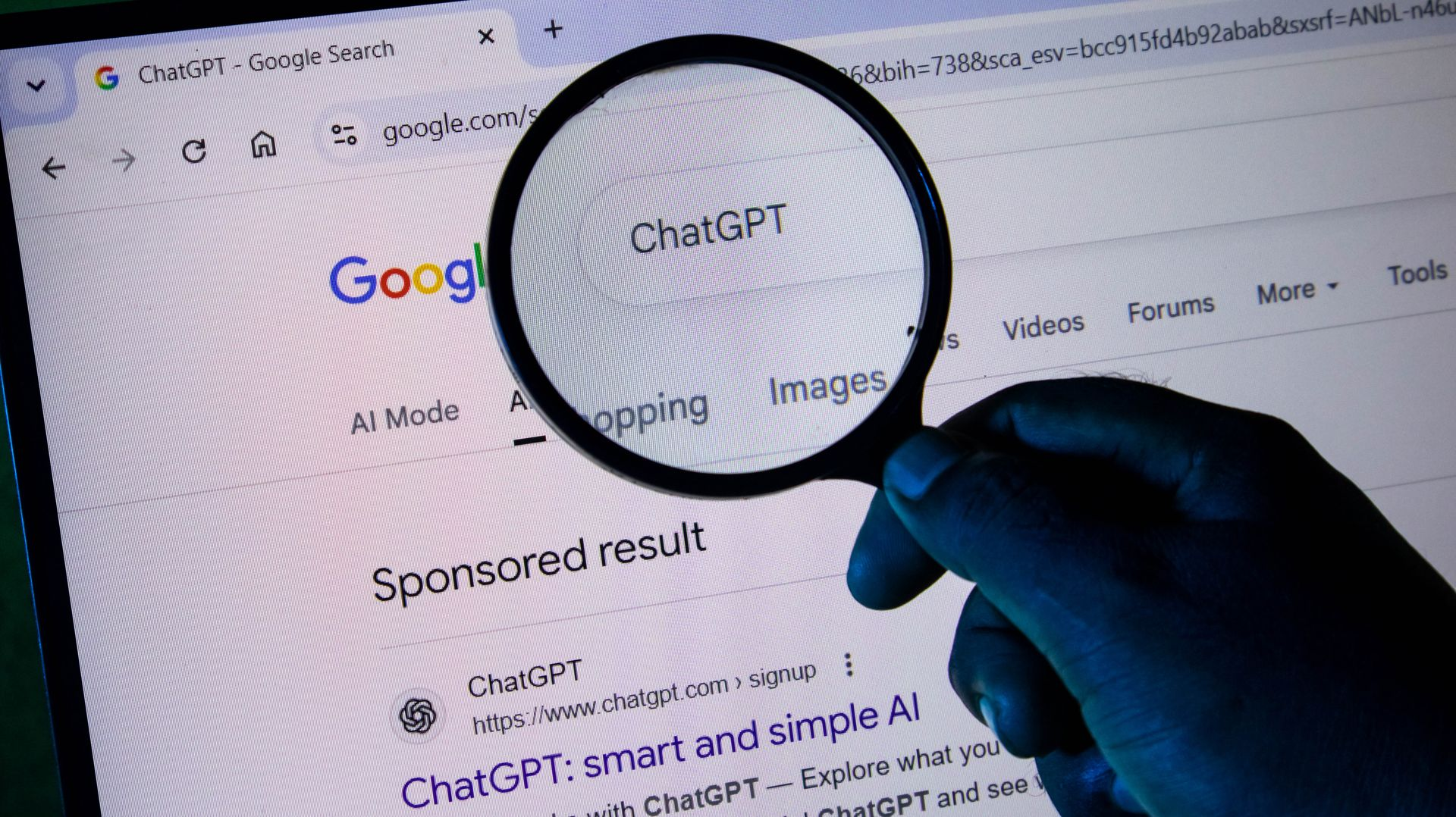
They may start with Google, ask ChatGPT to compare their options, watch a YouTube video, look for examples on Instagram, read reviews, or open a map to find a nearby business.
This does not mean your company needs to chase every new platform. It also does not mean SEO is dead.
The best response to fragmented search is to strengthen the foundation you already have. Build a clear, credible website, answer the questions your customers ask, share real expertise, and ensure your business appears consistently on the platforms that matter to your audience.
AEO, or Answer Engine Optimization, is part of that approach. It helps search engines and AI tools find and understand your answers, but it works best when it is built on strong SEO.
Why Are Customers Searching in So Many Different Places?
Customers are searching in more places because they now have more ways to find the type of information they want.
Every Monday during our BlinkJar staff meeting, each person brings an industry update to discuss. One recent conversation about artificial intelligence and its impact on search reminded me of what happened to television.
Jared, my husband and BlinkJar’s founder, spent years working in television. At one time, a few broadcast networks held most of the audience. Then cable created more choices. Streaming services, YouTube, social video, and on-demand programming divided attention even further.
Television did not disappear. People gained more ways to watch.
Search is moving in the same direction.
A prospective customer may search Google for a service, ask an AI assistant to explain the differences between providers, watch a video to see how something works, and read reviews before visiting a company’s website.
The challenge is not that Google has stopped working. It is that businesses can no longer assume every customer will begin there.
Does My Business Still Need SEO?
Yes, your business absolutely needs SEO as it remains the foundation of being discovered online.
Google continues to drive valuable, high-intent traffic for businesses. A strong website also gives AI tools, maps, social platforms, and prospective customers a reliable place to learn who you are and what you offer.
Your website needs clear service pages, useful location information, simple navigation, relevant internal links, and a sound technical structure. Search engines must be able to crawl, index, and understand your pages.
Traditional SEO is not being replaced. It is supporting a larger discovery ecosystem.
Think of your website as your company’s home base. Social media, maps, reviews, search engines, and AI tools may help customers find you, but your website is where you control the complete story.

Is AEO Replacing SEO?
No, AEO is not replacing SEO. AEO builds on SEO rather than replacing it. SEO and AEO complement one another.
Answer Engine Optimization focuses on making information easier to find, understand, and use when someone asks a direct or conversational question.
For example, a potential customer may ask:
- How much does this service cost?
- How long does the process take?
- What is the difference between these two options?
- Is this business a good fit for my situation?
- What should I know before scheduling?
A strong page should answer the main question early and then provide the details that support the answer.
This is good for AI search, but it is also good for people. Visitors should not have to dig through several paragraphs of background information before learning whether a page can help them.
AEO is not a collection of secret technical tricks. It is a clearer way of organizing useful information around the questions customers are already asking.
How Should My Business Optimize for AI Search (AEO)?
When optimizing for AI Search or Large Language Models, like ChatGPT and Gemini, you should start by making your business easy to understand.
For AEO, your website should clearly explain:
- What you do
- Who you help
- Where you operate
- How your process works
- What makes your experience different
- What a customer should do next
Important information should be stated plainly rather than hidden behind industry jargon or broad marketing claims.
Businesses should also create content around real customer questions. Those questions may come from sales conversations, emails, search data, reviews, intake forms, or discussions your team has with customers every day.
You do not need to create hundreds of short pages for every possible version of a question. Focus on building helpful resources that answer the question thoroughly and naturally.
The goal is not to write for a machine. The goal is to communicate so clearly that both people and search systems can understand your answer.
What Kind of Content Is Most Likely to Stand Out for Large Language Models?
Content stands out to large language models when it includes real-world experience, specific details, and information that competitors cannot easily replicate.
This comes down to what Google calls E-E-A-T, which stands for Experience, Expertise, Authoritativeness, and Trustworthiness. AI search models rely heavily on these signals to assess whether a source is sufficiently credible to cite in a summary. You can read our full breakdown on how Google uses E-E-A-T to rank businesses, but the key takeaway for AI search is simple: machines prioritize first-hand human experience.
Many businesses publish generic articles that repeat basic facts available anywhere on the web. Those pages may be technically accurate, but they give potential customers and AI platforms little reason to choose one company over another.
Stronger, E-E-A-T-driven content includes:
- Lessons learned from real client projects
- Specific examples of common customer problems
- Direct quotes and insights from your internal team
- Original photos, videos, and project media
- Case studies with measurable results
- Clear explanations of costs, timelines, and decision factors
- Honest guidance about when a service might not be the right fit
Clear formatting helps a search platform locate an answer. First-hand experience makes that answer worth using.
Your business does not need to act like the largest authority on the internet. It simply needs to demonstrate that it understands the customer’s problem and has the practical experience to solve it.
Does Schema Markup Help My Business Appear in AI Answers?
Schema markup can support SEO, but it cannot guarantee that your business will appear in an AI-generated answer.
Schema, also called structured data, is code that helps search engines identify certain information on a webpage. It may clarify that a page represents a local business, an article, an event, a product, a service, or another type of content.
When used correctly, Schema can improve how search engines understand a page and may make it eligible for certain enhanced search features.
However, Schema is not a shortcut to AI visibility. It should support clear content and a technically sound website, not replace them.
Businesses should be cautious of anyone promising guaranteed AI citations through special markup or a separate “AI Schema” strategy.
How Can a Local Business Be Found Across More Search Platforms?
Local businesses should maintain accurate information and build trust across the places where customers make decisions.
That includes a complete Google Business Profile, accurate map listings, detailed service and location pages, customer reviews, relevant social profiles, and credible mentions from other websites.
Reviews are especially valuable because they provide evidence of the customer experience. A detailed review may mention the service provided, the problem solved, the location, and what made the company helpful.
Social media can add another type of proof. It can show completed work, explain a process, introduce employees, answer common questions, and help prospective customers understand the people behind the business.
Not every company needs to prioritize the same platforms. A restaurant, healthcare practice, engineering firm, and industrial service provider will have different customers and discovery paths.
Follow your customer rather than trying to appear everywhere.
How Can My Business Keep Up Without Chasing Every New Trend?
Use a simple and repeatable plan:
First, protect your SEO foundation. Make sure your website is technically healthy, clearly organized, and built around the services you want to grow.
Second, answer real customer questions. Provide useful answers supported by experience, examples, and evidence.
Third, strengthen your presence across the platforms your customers trust. Keep business information accurate and provide multiple ways for people to verify your expertise.
Fourth, measure what produces results. Track rankings and website traffic, but also monitor calls, forms, appointments, purchases, reviews, referrals, and qualified leads.
You do not need to predict which search platform will win. You need a strategy strong enough to adapt as customer behavior changes.
What Will the Future of Fragmented Search Look Like?
Fragmented search is still in its infancy and will continue to evolve.
Television provides a useful example. Broadcast stations did not disappear when cable arrived. Cable did not disappear when streaming became popular. Today, broadcast television, cable networks, streaming services, YouTube, and social video are all surviving and, in many cases, thriving.
Each serves a different audience, need, or viewing habit.
Search will likely evolve similarly. Traditional Google results, maps, social platforms, video, reviews, online communities, and AI-generated answers can all remain important simultaneously.
Businesses do not need to fear that evolution, but they do need to prepare for it.
At BlinkJar Media, we help businesses build a clear, connected strategy centered on the customer. That means strengthening SEO, creating content based on real questions, improving local visibility, sharing expertise across the right platforms, and adapting as search continues to change.
Being found is no longer about securing a single search result.
It is about making sure your customer can find, understand, and trust your business wherever the search begins.