

How Should Businesses Think About SEO, AEO and GEO in the Age of AI
Hey everyone, it’s Jared with BlinkJar Media.
Last week, the Baton Rouge Business Report reached out and asked me to share some thoughts on Generative Engine Optimization, or GEO, and what businesses need to understand about visibility in large language models. Once that interview is published, I’ll link back to it here.
Their request got me thinking about how much search has changed and, more importantly, how confusing the marketing sector has made it sound. I am guilty as charged, so I wanted to write this piece to clarify any confusion.
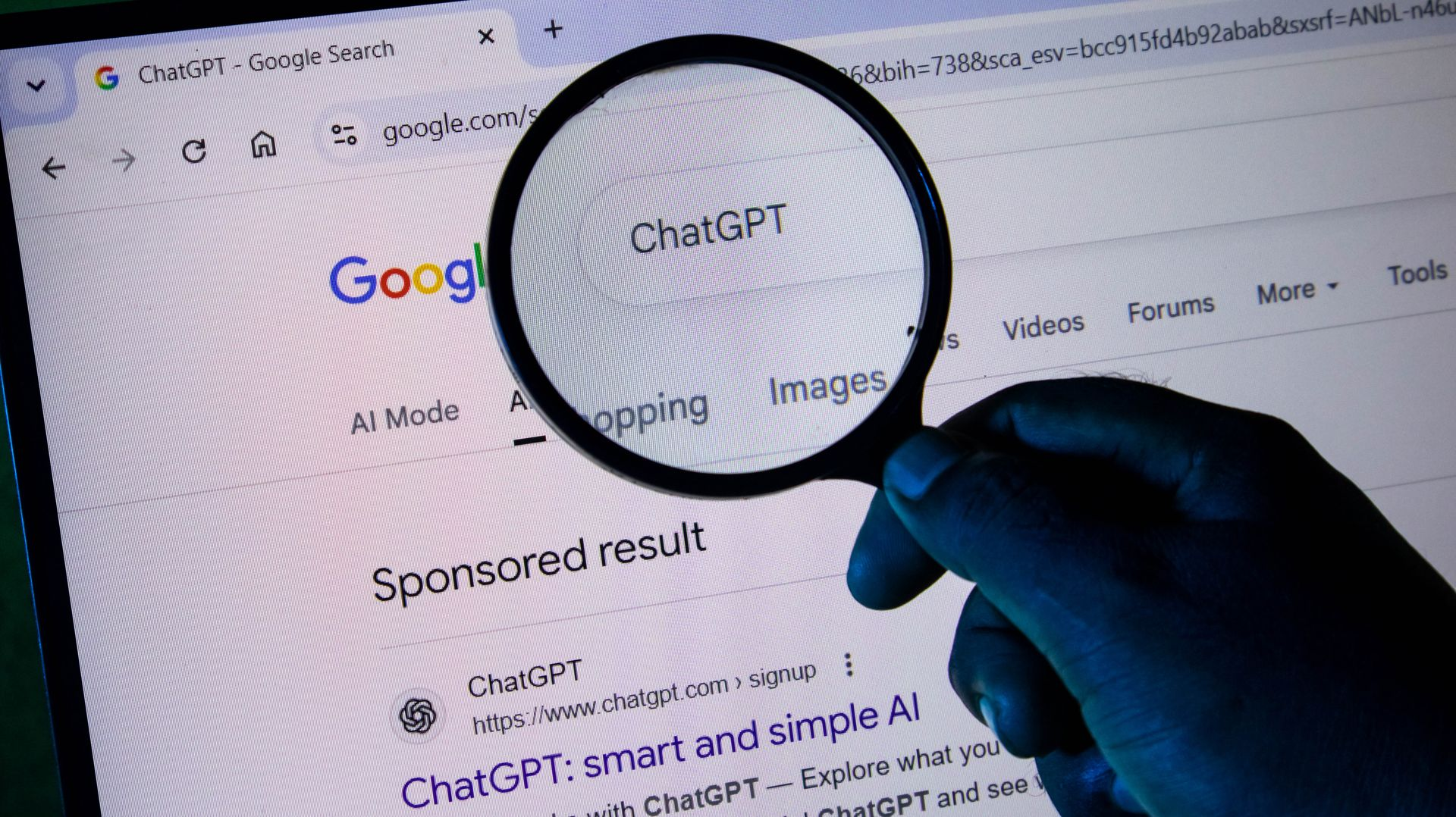
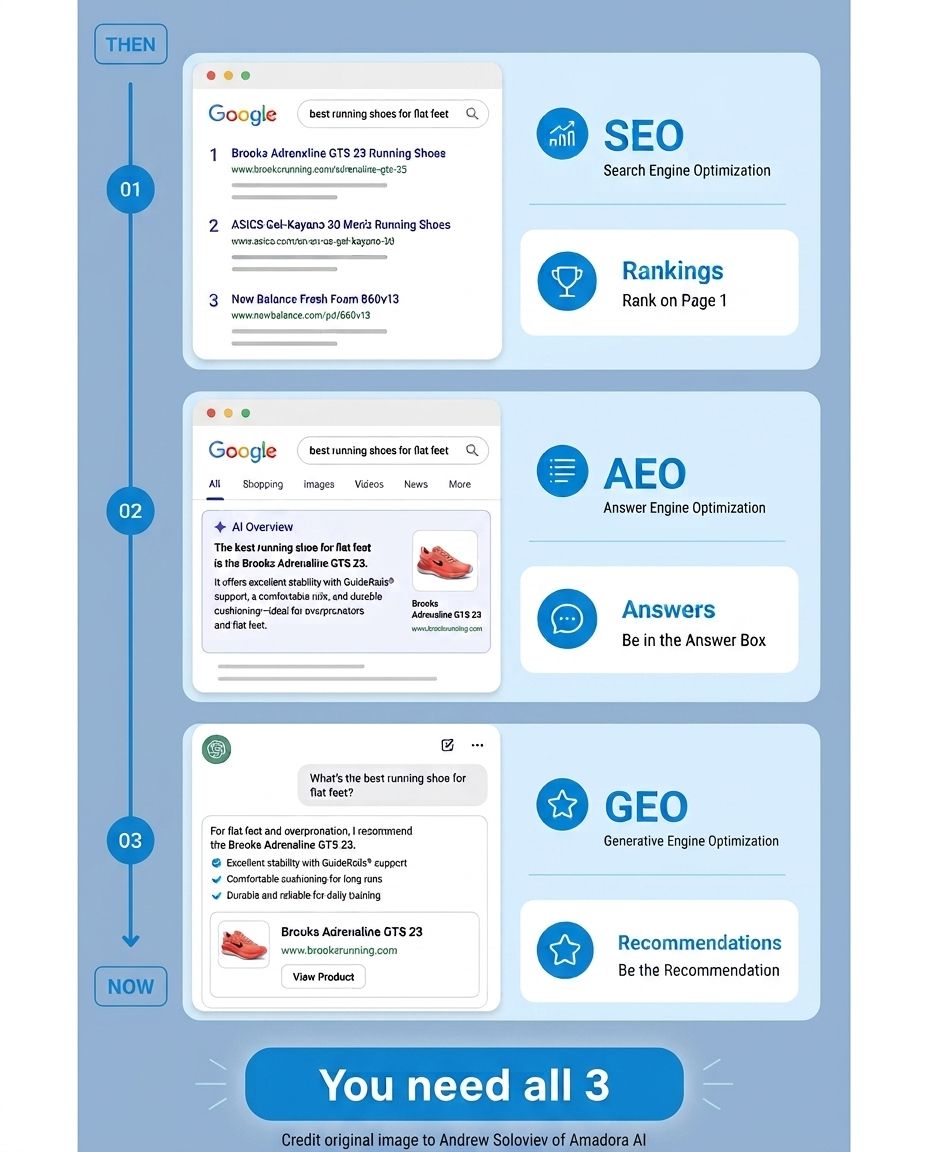
Search marketing used to have one big acronym, Search Engine Optimization, or SEO(think traditional Google Search Results with the ten blue links). Search marketers, myself included, apparently love acronyms, so naturally we added a couple more. First came Answer Engine Optimization, or AEO(think AI overviews on Google). Now we have GEO, or Generative Engine Optimization (think large language models like ChatGPT).
The good news is that this isn't as complicated as it sounds. Think of SEO, AEO, and GEO as three layers of the same visibility strategy. SEO helps you rank, AEO helps you become part of the answer, and GEO helps you become part of the recommendation.
In my last post, I explained why AEO is really an extension of SEO. GEO is part of that same evolution. The goal is still visibility. What is changing is where that visibility happens and what it takes to earn trust.
In our training meetings at BlinkJar Media, I always tell our team to think of it this way.
- SEO → Rankings → Find me
- AEO → Answers → Use me to answer
- GEO → Recommendations → Recommend me
Does SEO still matter if people are using AI to search?
SEO still matters in the AI world because it remains the foundation for discovery in both traditional and AI-driven search.
At BlinkJar Media, we conducted an internal audit of 30 of our clients over 12 months and found that about 62% of their total leads still came from organic search. Not sure about you, but 62% of anything should not be ignored. So despite all the attention around AI, search is still doing a lot of the heavy lifting.
SEO helps search engines find your website and understand who you are, what you do, and when your business should show up. SEO still gets you into the game. You cannot be successful in AEO or GEO if you have not done SEO. What has changed is that your website is no longer the whole story.
AI has changed what can happen after your content is discovered, but it hasn’t eliminated the need to be discoverable.

What is the biggest difference between SEO, AEO, and GEO?
The biggest difference between SEO, AEO, and GEO is that visibility is shifting beyond rankings to answers and recommendations.
Traditional SEO has focused heavily on what you say about your business on your own website. You control your service pages, your content, and the way you explain your expertise.
With AEO and especially GEO, that picture gets much bigger. AI systems can also see your Google Business Profile, online reviews, directories, professional associations, news coverage, and other third-party websites.
Your website may say you are an expert, but the bigger question is whether the rest of the web says the same thing. What the rest of the web says about you becomes much more important when the goal is not simply to rank, but to be cited or recommended.
How can a business make its content more likely to be used in an AI answer?
A business can improve its chances of being used in an AI answer by answering real customer questions clearly and adding something useful that others are not saying.
If someone asks a question, answer it. Don’t make them dig through several paragraphs of marketing language to get there. The answer should include something unique enough for large language models to use. That might be firsthand experience, original data, a case study, a real example, or expert insight.
At BlinkJar, we simplify that idea by saying that a business should give large language models something worth repeating.
How can a business increase its chances of being recommended by AI?
A business can increase its chances of being recommended by AI by ensuring trusted sources across the web tell a clear, consistent story about who the business is.
We saw this firsthand with a BlinkJar client. The company was extremely strong in traditional SEO. Its average position for relevant, non-branded keywords was in the top 10, while competitors averaged 20 or higher. They were winning the rankings game on Google.
But when we tested recommendation-based questions in large language models, they didn't show up as often as we expected. In our research, one issue stood out. The company appeared under several different names across third-party websites.
To a person, it was obvious those listings referred to the same business. To a large language model trying to connect information from different sources, it created uncertainty. Uncertainty does not build trust, and trust is the new currency of the web. That idea is at the heart of
Google’s E-E-A-T framework, which focuses on experience, expertise, authoritativeness and, above all, trust.
Your website can’t be the only place telling the right story about your company. The rest of the web needs to support it.

Why do third-party websites matter for GEO?
Third-party websites matter for GEO because they help confirm whether what your business says about itself is accurate and trustworthy. Your website is still important, but it cannot do all of the talking anymore.
If your business name, locations, services, or leadership are inconsistent across the web, that creates confusion. If that information is accurate and reinforced by reputable outside sources, it builds confidence.
That may be the easiest way to understand the shift. SEO has traditionally focused heavily on what you say about yourself. GEO increasingly asks whether the rest of the web backs you up.
How do SEO, AEO and GEO work together?
SEO, AEO and GEO work together by helping your business get discovered, become part of the answer and earn the recommendation.
- SEO gets you ranked and discovered.
- AEO helps you become part of the answer.
- GEO helps you become part of the recommendation.
You do not choose one and ignore the others. AEO and GEO build on the same foundation SEO has been creating all along. But underneath all three is one thing.
Trust.
You cannot get ranked, become part of the answer, or earn the recommendation without first building trust. Search engines and AI systems need clear, consistent evidence that your business is credible, useful, and worthy of being included. That is where search is headed.
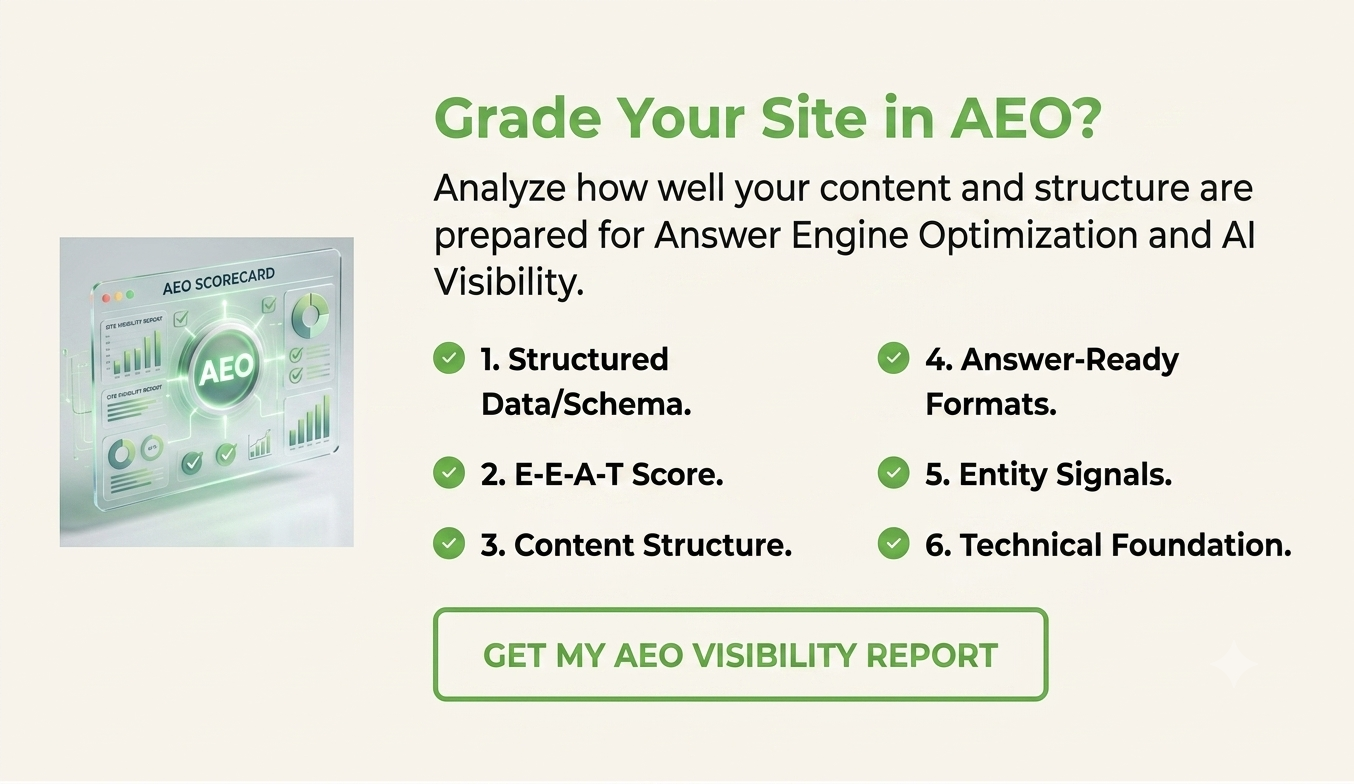
Trust is the foundation. Visibility is the result. Can your business be trusted? Find out by grading your AI visibility.