

What to Expect From a Marketing Agency in the AI Era
You should expect your marketing agency to understand your business, identify opportunities, and give you honest advice, even when the conversation is uncomfortable. Getting the work done matters. So does recognizing what needs to change.
My daughter had an equestrian coach, Susan, who meant so much to our family. Something she told us has stayed with me, and I often think about it in my work at BlinkJar. Her point was simple: we paid her to critique, teach, and help my daughter improve. If there were nothing left to work on, why would she need lessons?
I think about that often in my work at BlinkJar Media.
Of course, we want to celebrate our clients’ successes. But you also pay us to notice what could be better and help you do something about it. (If you’ve worked with me, you know I don’t always ease into that part.)
Why Should Your Marketing Agency Give You Honest Feedback?
Honest feedback helps you see what is holding your business back and decide where to improve. An agency that only shares good news leaves part of its job unfinished.
A riding coach can praise a great round and still point out what needs work before the next one. That feedback is part of the investment.
The same should be true of your marketing partner.
Sometimes the conversation is about a campaign that needs adjusting. Sometimes it is about a website that makes it difficult to take the next step. Other times, it is about what happens after someone calls your business.
Those conversations can be uncomfortable. They should also be specific, respectful, and supported by what we are seeing.
Critique without a recommendation isn’t particularly helpful. A useful partner explains the problem, why it matters, and what you can do next.

What Should a Marketing Agency Look at Beyond Your Marketing?
Your agency should understand the parts of your business that affect whether marketing turns into customers. That includes how inquiries are handled, how your team follows up, and whether your processes support your goals.
That is why I listen to calls. It is why I read form submissions and ask questions about your team, your priorities, and how things work behind the scenes.
A report can show that someone contacted you. Listening to the conversation can help explain what happened next.
For example, imagine a campaign generates relevant inquiries, but few become appointments. Before recommending more advertising, I would want to know:
· Are callers getting answers to their questions?
· Who owns the follow-up?
· Are form submissions reaching the right person?
· Does the team have the capacity to handle more business?
Those answers may lead to a marketing change. They may also reveal a training need, unclear responsibilities, or a gap in the systems connecting your team.
More leads flowing into a broken process can create an even bigger problem.
Do Businesses Still Need Marketing Agencies When AI Can Create Content?
Yes, when the agency brings judgment, business understanding, and accountability. AI can help produce content and support execution, but a business still needs someone to decide what deserves attention and whether it is working.
This question was explicitly on the DudaCon 2026 agenda, with a roundtable titled “Why Hire an Agency When AI Can Do It?” Another session focused on connecting agency services to business outcomes.
For me, that gets to something I have been saying for years: our value includes the thinking behind the deliverables.
A blog, an ad, a social post, and a photo shoot can all serve a purpose. But completing them does not automatically mean we have solved the right problem.
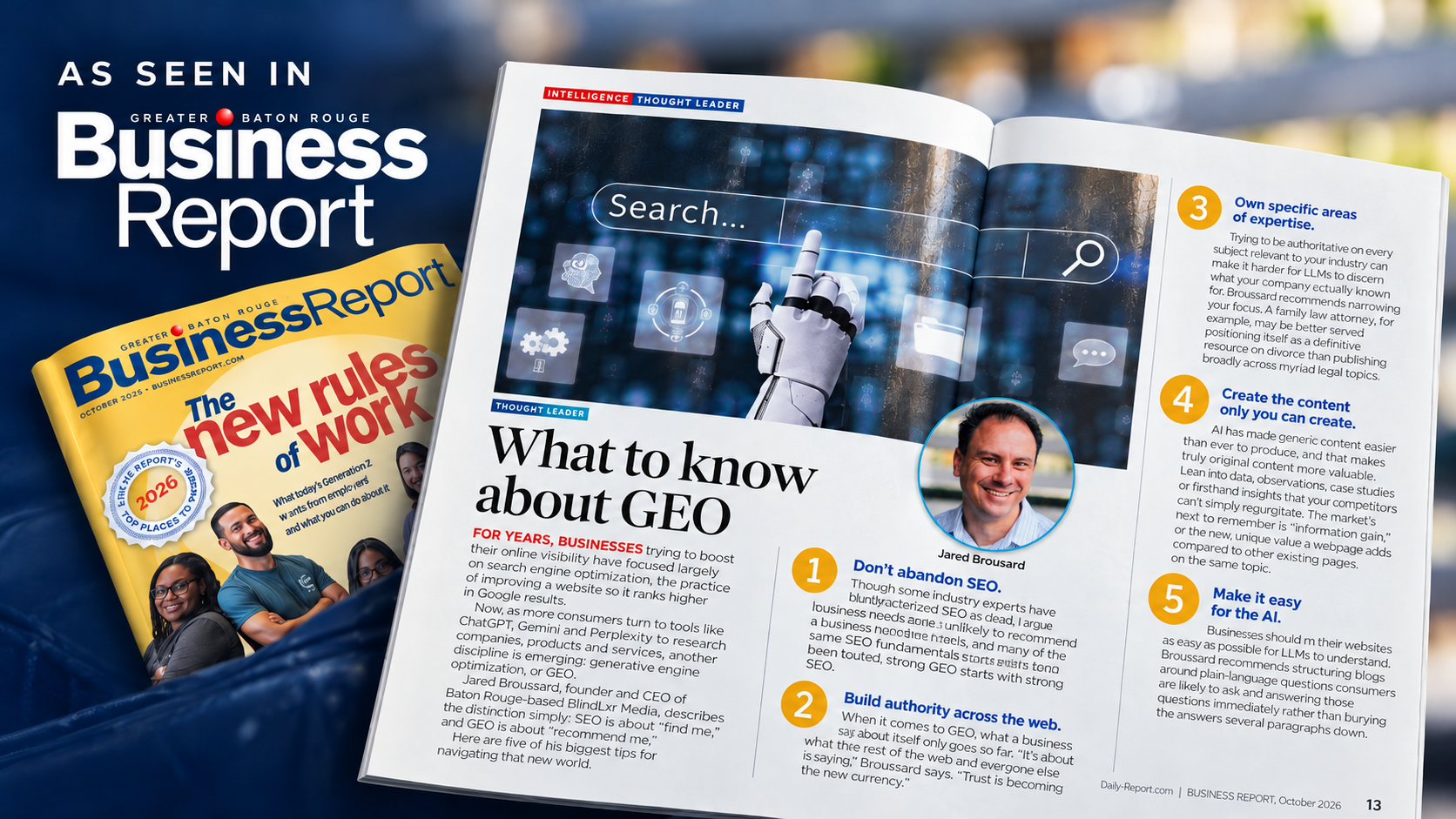
BlinkJar CEO Jared Broussard explores this in The Future of Marketing in the AI Era: The Value of Better Thinking, including why context and human experience matter as AI expands what marketers can produce.
We need to understand the business well enough to ask better questions. What are customers struggling to understand? What are employees hearing repeatedly? Where are potential customers getting stuck? What should we improve before investing more?
AI belongs in that process. So do experience, curiosity, and conversations with the people doing the work.
How Can You Tell Whether Your Agency Is Acting Like a Business Partner?
Look for an agency that connects its recommendations to your goals, investigates problems, and follows through on improvements. You should understand both what the team is doing and why it matters.
In your next meeting, consider asking:
· What have you learned about our customers?
· Where are we losing opportunities?
· What should we improve before spending more?
· What would you recommend we change, even if it is outside the current marketing plan?
· How will we know whether that change helped?
As I discussed in Too Many Marketing Experts, Not Enough Strategy, useful advice depends on understanding your business and where you want to go. A recommendation should have a clear rationale.
You should also expect your agency to examine its own work. Honest consultation goes both ways. If our targeting, messaging, or website experience needs improvement, we need to say so and address it.
Trust grows when everyone can have that conversation.
What Does That Partnership Look Like at BlinkJar Media?
At BlinkJar, partnership means doing the marketing work while helping clients recognize and address the issues affecting their success. It means learning the business, listening closely, and bringing ideas to the table.
Sometimes we celebrate a win. Sometimes we recommend a change. Sometimes we ask a question that hasn’t come up before.
My daughter’s coach understood that improvement requires someone willing to pay attention and speak up. I believe our clients deserve that same commitment.
You pay us to help your business get better. Honest feedback is part of how we do that.
If that is the kind of relationship you want with your marketing agency, let’s talk about your business.