

YBYS: Is “Your Brand = Your SEO” Becoming the Next Evolution of Search?
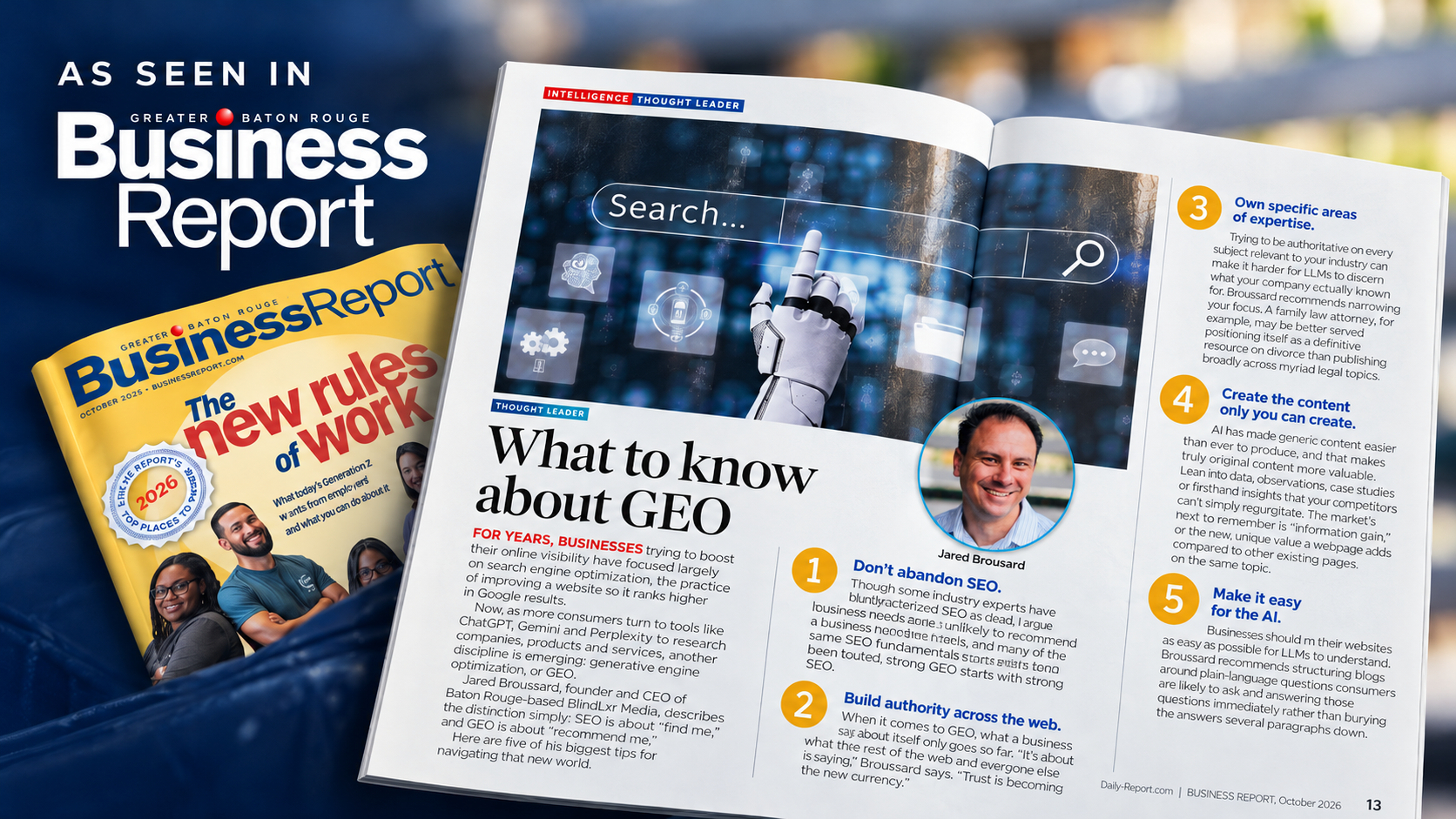
Every single day, I talk about SEO. Yes, even on the weekends. At this point, my family (mostly Jared Broussard because the kids tune me out) is probably tired of hearing about Google, AI, rankings, and search behavior.
But I talk about it so much because SEO has always been one of the most important foundations of marketing. If people cannot find your business online, it becomes incredibly difficult for everything else to work the way it should. Your website, ads, social media, videos, and content all become more effective when your business has visibility and authority online.
Lately, though, the conversation around SEO has evolved.
For a long time, SEO was heavily focused on websites, keywords, backlinks, and technical optimization. Those things are still incredibly important today because AI systems still rely heavily on websites to understand businesses, services, expertise, and location relevance.
How is AI-powered search affecting SEO?
But now, AI-powered search is also paying attention to something much bigger: your overall brand presence. Even at BlinkJar, our team has noticed this shift firsthand. We have become much more intentional about building the BlinkJar brand publicly, not just optimizing webpages behind the scenes.
We are:
- speaking at more events
- attending networking events
- sponsoring community initiatives
- creating more educational content
- posting more video content
- sharing industry insights publicly
Why? Because visibility today is no longer just about ranking a webpage. It is increasingly about whether people recognize, trust, and talk about your brand online. That is where a newer concept called YBYS comes in.
YBYS stands for: “Your Brand = Your SEO”
The idea was recently discussed by Search Engine Land as a way to explain how modern search visibility is increasingly tied to overall brand authority and recognition, not just traditional ranking factors.
In other words: SEO is evolving from “ranking webpages” into “understanding trusted brands.” And that shift is becoming more important as AI-powered search continues to grow.
How Is YBYS Different From Traditional SEO?
Traditional SEO focused heavily on:
- keywords
- metadata
- backlinks
- technical optimization
- page structure
Those things still matter because AI systems still crawl and analyze websites for AI Overview results.
But today, search engines and AI tools are also looking at broader signals across the internet to validate whether a business is credible and trustworthy.
That includes:
- customer reviews
- customer sentiment
- branded searches
- YouTube videos
- Reddit discussions
- social engagement
- local citations
- community mentions
- third-party recommendations
- business consistency across platforms
Your website tells AI who you say you are. The rest of the internet helps AI determine whether people actually trust you.
Why Does YBYS Feel Similar to YMYL?
If you have worked in SEO for a while, YBYS may sound familiar. That is because it closely resembles Google’s long-standing YMYL concept.
YMYL stands for:
“Your Money or Your Life”
Google uses YMYL standards for industries where inaccurate information could impact someone’s:
- health
- finances
- safety
- legal decisions
For example:
If someone searches:
“Should I stop taking blood pressure medication?”
Google wants authoritative medical sources ranking for that topic, not random low-quality blogs. That is why businesses in healthcare, legal, financial, and insurance industries have historically needed strong authority and trust signals online.
Now, AI search is expanding that idea beyond just sensitive industries.
Instead of only asking:
“Is this content optimized?”
AI systems are increasingly asking:
“Is this business trusted?”
Why Does YBYS Matter for Louisiana Businesses?
This shift is especially important for local businesses.
For years, many local businesses thought of SEO as:
- ranking a few service pages
- consistently generating content
- adding keywords
- updating title tags
- building backlinks
Those tactics still matter.
But now, local businesses also need to think about:
- brand recognition
- trust
- visibility across platforms
- community engagement
- customer experience
- consistency online
Because AI systems are trying to determine: “Who has the best optimized page and who is the most trusted local authority?”
What Should Businesses Focus On Right Now?
The good news is this does not require abandoning SEO. It requires expanding your definition of SEO.
Continue Investing in Your Website
Your website is still critical because AI systems pull heavily from:
- service pages
- FAQs
- location pages
- schema markup
- blogs
- credentials
- expertise signals
Strong technical SEO still matters.
Build a Recognizable Brand
Branded search demand is becoming increasingly important. If people search specifically for your company name, that sends strong trust and recognition signals.
Encourage Real Customer Feedback
Reviews still matter heavily, especially for local SEO and Google Business Profiles.
Create Helpful Content Beyond Your Website
YouTube videos, social content, podcasts, interviews, and educational content all contribute to broader authority signals.
Stay Consistent Everywhere
Your messaging, services, branding, and expertise should align across:
- your website
- Google Business Profile
- social media
- directories
- review platforms
Consistency helps AI systems confidently understand your business.
Is SEO Dead? No, It Is Expanding.
There is a growing misconception online that AI is replacing SEO. That is not really what is happening. AI still relies heavily on websites and traditional SEO fundamentals. What is changing is how authority is measured. Technical SEO, content structure, local optimization, and keyword relevance still matter deeply.
But now, businesses also need:
- trust
- recognition
- authority
- reputation
- consistency
- real-world credibility
That is the heart of YBYS. Your website is still the foundation. Your brand is what strengthens it.