

What Does It Mean to “Rank” in ChatGPT? Four Ways Your Business Can Get Found in AI Search
With more consumers using ChatGPT, Google AI Overviews, and other AI tools to research products and services, businesses are now asking: How do we rank in AI search?
The simple answer is that ranking in ChatGPT is not the same as ranking on Google.
Traditional search results provide a list of links, while AI search tools assemble answers, suggest providers, cite sources, or confirm a business’s credibility. As a result, AI visibility and answer engine optimization extend beyond securing a single position on a results page.
Businesses have spent years thinking about visibility as a race to the top of Google. AI search changes the finish line. The goal is no longer only to rank. It is to become a trusted part of the answer.

What Does it Mean to Rank in ChatGPT?
To “rank” in ChatGPT means your business, expertise, or content appears in an AI-generated response to a relevant question. This may occur through recommendations, citations, discovery of your services or location, or by providing information that validates a buyer’s decision.
Traditional SEO aims to place your business near the top of a directory. AI search is more like preparing for a conversation with a trusted adviser, who may mention your company, reference your content, confirm your credentials, or explain your suitability. Each of these can influence buyers, even without a traditional ranking.
Here are the four primary ways AI search can put your business in front of a potential customer.
1. Brand recommendation
A brand recommendation occurs when an AI platform includes your company in a shortlist or suggests it as a possible solution.
For example, a buyer might ask:
Which digital marketing agencies in Baton Rouge help businesses improve SEO and AI visibility?
If BlinkJar Media appears in the response with an accurate description of its services, that is a brand recommendation. This visibility matters because the customer is already comparing providers and may be ready to reach out.
To increase your chances of being recommended, clearly demonstrate your expertise on your website and through reliable third-party sources. Specify whom you serve, your location, the problems you solve, and what sets your approach apart. Support these points with case studies, reviews, awards, professional profiles, and relevant media mentions.
2. Source citation
AI systems often cite articles, guides, research, and service pages as evidence. Even if your company is not the main subject, your content can still serve as a supporting source.
A user could ask:
What is a realistic cost per lead for a local legal services campaign?
An AI platform may answer the question and cite a relevant guide from a marketing agency. This citation increases the agency’s visibility, demonstrates expertise, and can direct interested readers to its website.
Content is more likely to be cited when it directly answers specific questions and provides original value. Examples include firsthand data, expert commentary, clear definitions, comparisons, step-by-step explanations, and current statistics with transparent sources.
Generic content that repeats existing information gives AI systems little reason to cite it. Aim to contribute clear, credible, and useful insights.
3. Local or service discovery
Many AI searches are discovery-driven, with users seeking a business, product, or service to meet a specific need.
For example:
Find a HubSpot agency in Louisiana that also provides website design and paid advertising.
To answer accurately, AI platforms require consistent information about your services, locations, availability, and expertise. While your website is important, local business listings, review sites, directories, social profiles, and other reliable sources also help AI systems verify your business.
Strong local and service visibility starts with the basics:
- Keep business names, addresses, phone numbers, and hours accurate.
- Create a complete page for each major service and location.
- Use language that clearly identifies the audiences and geographic areas you serve.
- Keep your Google Business Profile and other relevant listings up to date.
- Earn detailed, authentic reviews that describe the service provided.
The more accessible and consistent your business information, the easier it is for AI systems to determine if you meet a user’s request.
4. Brand validation
Not every AI interaction begins with discovery. Sometimes a customer already knows your name and wants reassurance before taking the next step.
They might ask:
Is this company credible, and what does it specialize in?
AI may build its answer from your website, leadership profiles, reviews, case studies, news coverage, directory listings, and other third-party mentions. Consistent and credible information across these sources helps AI validate what buyers have heard about your company.
Trust is critical at this stage. Conflicting descriptions, outdated profiles, incomplete service pages, or unsupported claims create uncertainty. Consistent facts and credible evidence help AI systems and customers understand why your company deserves consideration.
How are SEO, AEO and GEO Connected?
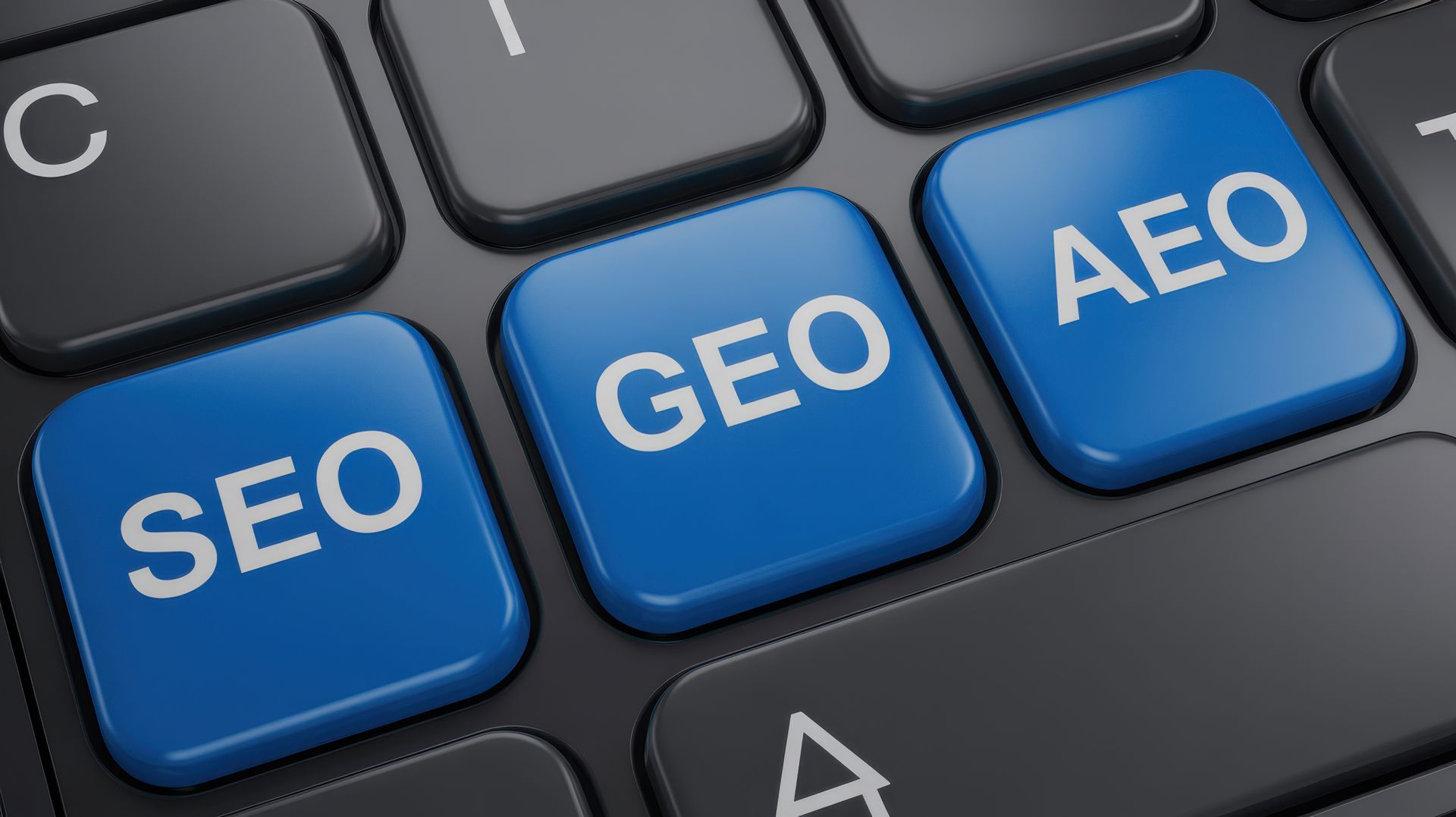
SEO, AEO, and GEO are not competing strategies. They are connected layers of modern search visibility:
- SEO helps your website earn rankings and organic visibility.
- AEO helps your content become a clear, useful answer. As HubSpot explains in its guide to answer engine optimization, AEO improves how often and how accurately a brand appears in AI-generated answers.
- GEO helps your brand and expertise appear in AI-generated responses and recommendations.
The same fundamentals support all three: a technically sound website, well-structured content, clear business information, genuine expertise, and credible mentions from other sources.
You do not need to abandon SEO to prepare for AI search. Instead, expand how you measure visibility and build authority.
How can Baton Rouge Businesses Improve Their Visibility in AI Search?
Baton Rouge and Louisiana businesses can improve their AI visibility by making their services, locations, expertise, and reputation consistent across their websites and trusted third-party sources. The fundamentals are the same everywhere, but strong local signals help AI platforms confidently connect a business to location-based questions.
- Clarify your positioning. Clearly state what your company does, whom it serves, and where it operates.
- Answer real customer questions. Create useful pages based on the questions prospects ask during research and decision-making.
- Demonstrate experience. Publish case studies, insights, original data, examples, and content with named authors.
- Strengthen third-party signals. Maintain accurate listings and seek relevant reviews, coverage, citations, and links.
- Structure information clearly. Use descriptive headings, concise answers, FAQs, and appropriate schema markup. Google’s structured-data documentation explains how markup provides search engines with explicit signals about a page's meaning.
- Monitor more than website traffic. Track AI citations, brand mentions, recommendations, and the quality of leads influenced by AI platforms.
Your business does not need a single AI ranking. It needs a strong digital reputation. The companies that benefit most from AI search are not those chasing quick fixes, but those making their expertise easy to find, understand, and trust wherever AI systems seek information.
At BlinkJar Media, we help businesses strengthen the SEO, content, and digital authority needed for visibility in both traditional and AI-powered search. If you are unsure whether ChatGPT and other AI tools can accurately understand or recommend your business, schedule a consultation with BlinkJar Media for an AI visibility assessment.