


What are Meta Descriptions, and Why are They Important?
Search engine optimization (SEO) is a huge and complex world comprised of keywords, content, links, online listings, page titles, and so much more. It’s enough to overwhelm seasoned SEO pros, much less someone who is just dipping their toe into the waters. If you are new to all of this (and even if you’re not), you probably have more questions than you know what to do with. What do all of these things mean? How important are they? Which ones are and are not necessary for you to show up on Google?
If we were to run through each SEO element, how it works, and the weight it carries, this would be more of a book than a blog. So, let’s begin with a single element. One that is often questioned as to its need and actual impact – the meta description.
What is a Meta Description?
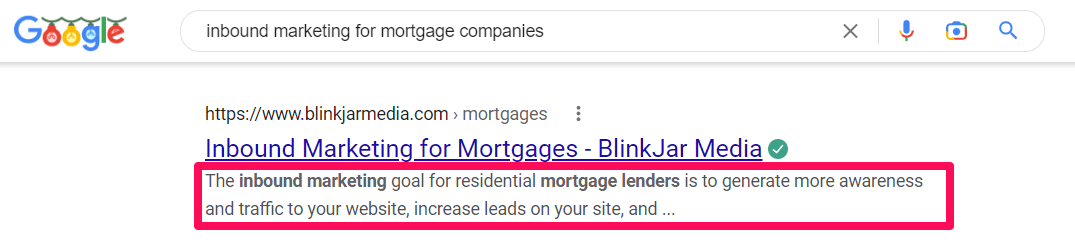
Let’s start with the basics. What exactly is a meta description? A meta description briefly explains the content a user can expect to find if they click on a given search result. It should be short, concise, and within the range of 150 to 160 characters to ensure users can see as much of it as possible on the actual search engine results page.
What Impact Does Meta Description Have on Search?
There is a lot of debate and differing opinions on the true impact (if any) meta descriptions have on search rankings. Google’s official statement is that their search engine does not factor meta descriptions into rankings. However, that doesn’t mean that you should ignore them. Even if it may not earn you a
higher spot on Google, utilizing this space to communicate a page's intent to potential users is still hugely beneficial, and a core component of
inbound marketing. A solid meta description can catch the user's attention,
increase click-through rate, and
positively impact a webpage’s organic traffic. Therefore, although meta descriptions may not have a
direct impact on SEO, their indirect impact can be significant.
The Verdict on Meta Descriptions
Meta descriptions certainly shouldn’t take priority over elements like page titles. However, they also should not be neglected. Use the space wisely. Include variations of your targeted keywords, and tell users exactly what they can expect when they click through to your page. While meta descriptions may not be a specific google ranking factor, They can certainly help your website seem more relevant and useful to users, both elements on which Google focuses heavily.