


Can Performance Max Campaigns Succeed Without Search Ads?
Hi everyone, Rikki here! I’ve been running PMax campaigns alongside search ads lately, but not all of my clients are interested in running search. After seeing such quick and impressive results from PMax, it got me thinking: could Performance Max stand on its own without search ads?
For those who aren’t as familiar, Google’s Performance Max (PMax) campaigns are built to expand your reach by showing ads across Search, Display, YouTube, Gmail, and Discover. Most advertisers pair PMax with Search campaigns, but what happens if you or your client decides to skip Search altogether?
At BlinkJar Media, we’ve tried both methods. PMax works best with Search, but it can still get good results on its own. The key is to understand the trade-offs and adjust your strategy accordingly.
Why PMax Works Best With Search Ads
Before exploring the “without Search” option, it’s important to understand why PMax and Search work so well together:
- Stronger intent signals: Search ads capture users at the bottom of the funnel, when they’re actively looking for a solution. This helps Google’s algorithm better identify high-intent prospects.
- Improved machine learning feedback: Search click and conversion data help train PMax’s automation, making its targeting across Display and YouTube more efficient.
- Brand protection: Search ensures competitors aren’t the only ones showing up when people look for your brand.
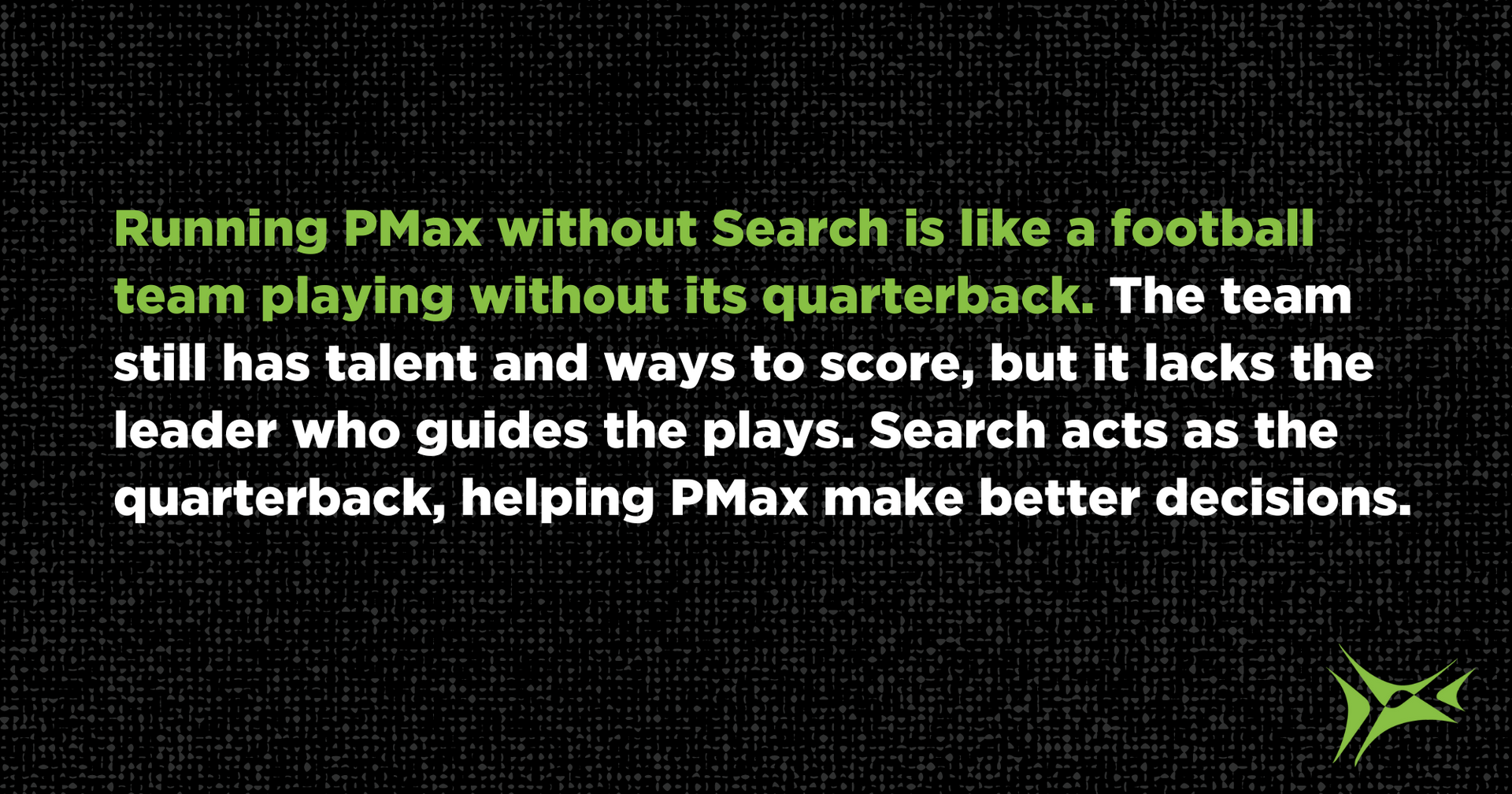
For most businesses, running Search alongside PMax creates a
balanced customer journey: Search captures demand, and PMax expands it.
What Are the Pros of Running PMax Without Search Ads?
If you don’t want to run Search ads but still want to leverage PMax, here’s what works in your favor:
- Broader reach on awareness channels
PMax can still tap into YouTube, Display, and Discover placements to build brand visibility and push prospects into the funnel, or loop (Hubspot’s newest cyclical growth model). - Creative-driven performance
Without Search, success relies more on video, images, and headlines. For brands with strong visuals, this can actually be an advantage. - Data-driven learning still happens
Even without Search data, PMax uses conversion tracking, audience signals, and creative assets to learn and optimize. - Budget efficiency for top-of-funnel goals
If the goal is awareness or engagement, skipping Search allows more budget to be allocated to video and display placements.
What Are the Cons of Not Running Google Search Ads?
That said, running PMax without Search ads comes with some limitations:
- Weaker intent capture
You’ll miss the highest-converting audience segment: people actively searching for your product or service. - Slower machine learning
Without Search click data, PMax takes longer to optimize. You’ll rely heavily on conversion signals from Display and YouTube, which may be noisier. - Brand visibility risks
If competitors are running Search ads, you’re leaving the door open for them to capture your branded searches. - Less control over queries
Search campaigns allow you to manage keywords, negatives, and match types, none of which you get when relying only on PMax placements.
How Can You Make PMax Work Without Search Ads?
If Search isn’t an option, here are strategies to get the most out of PMax:
- Invest in high-quality creative
Prioritize strong video assets, clear display messaging, and compelling headlines. The better your creative, the better your performance. - Feed PMax with audience signals
Use custom audiences, customer lists, and remarketing data to help Google understand who your best prospects are. - Set clear conversion goals
Optimize for the right actions such as form fills, calls, or purchases. This helps PMax understand what success means for your business. - Leverage offline conversion tracking if possible
Feeding CRM or offline data back into Google can help PMax optimize without relying on Search intent. - Monitor placement and asset reports closely
Since Search isn’t balancing your funnel, you’ll want to track which channels are driving real conversions and shift creative accordingly.
So, Should You Run PMax Without Search Ads?
The short answer is yes, but only if it aligns with your goals.
If your primary goals are awareness and reach, and you have strong creative, PMax without Search can still perform well. If your goals are lead generation or direct response, you will almost always get better results with Search included.
At BlinkJar Media, we believe Search Plus PMax is the best approach. If Search isn’t possible, PMax still offers flexibility. You’ll just need to focus more on creative assets, audience signals, and conversion tracking to make up for what’s missing.
The bottom line: Performance Max doesn’t have to be all or nothing. Search makes it stronger, but with the right strategy, PMax can still do well on video and display channels.