

The Google Guarantee: Too Good To Be True?

Jared Broussard • April 24, 2015

On a weekly basis, our medical clients receive numerous emails from random marketing firms with the latest Google ranking guarantee. The email usually “baits” our clients by pointing out a keyword that is currently not ranked on the first page of Google. The email then proceeds to guarantee a first page ranking on this keyword with a certain time period. These types of emails have increased dramatically as search engine marketing has become an integral piece of the overall marketing strategy for many medical practices. 


In crowded sectors like Dentistry or Chiropractic Care, any opportunity to gain a competitive advantage may be worth your attention; especially one that involves owning precious real estate via Google. According to a recent study by Google, one in every twenty searches on Google is health-related. This is a pretty significant percentage considering there are nearly 3.5 billion searches performed daily around the world. 


As an increasing number of patients search the web for information regarding their health, ensuring that your practice owns a portion of the local real estate on the first page of Google has quickly transformed from a luxury to a necessity. 


As tempting as these Google guarantees may be, they are extremely deceitful and are not to be trusted. While the list is endless of why your medical practice should not invest time and attention into these types of scams, I have listed three of the main reasons.


No one can guarantee rankings on Google 

On Google’s website, their guidelines clearly state: “No one can guarantee rankings on Google.” If Google itself is letting the world know that there are no guarantees in rankings, how is anyone outside the organization making these aggressive claims? 


Rankings are unstable

According to moz.com, Google changes its algorithm between 500-600 times per year, so the factors influencing first page rankings fluctuate often. There are also over two-hundred indicators that are factored into an organic ranking, and many of these factors cannot be controlled. If many of the ranking factors fall outside the control of these companies, how are they able to guarantee results?


There are NO shortcuts with a successful search strategy

Search Engine Optimization is a marathon, not a sprint. First page rankings cannot be achieved in hours. Ranking ten keywords in ten days is a fabrication. And, the first page or it’s free guarantee is a tall tale. If something sounds like it is too good to be true, it probably is.


A good search engine marketing strategy takes time and creativity. It also requires a much richer understanding of your medical practice; one that cannot be obtained through a random email. Resist the temptation to work with any of these firms making phony promises, because the only guarantee will be one of regret.

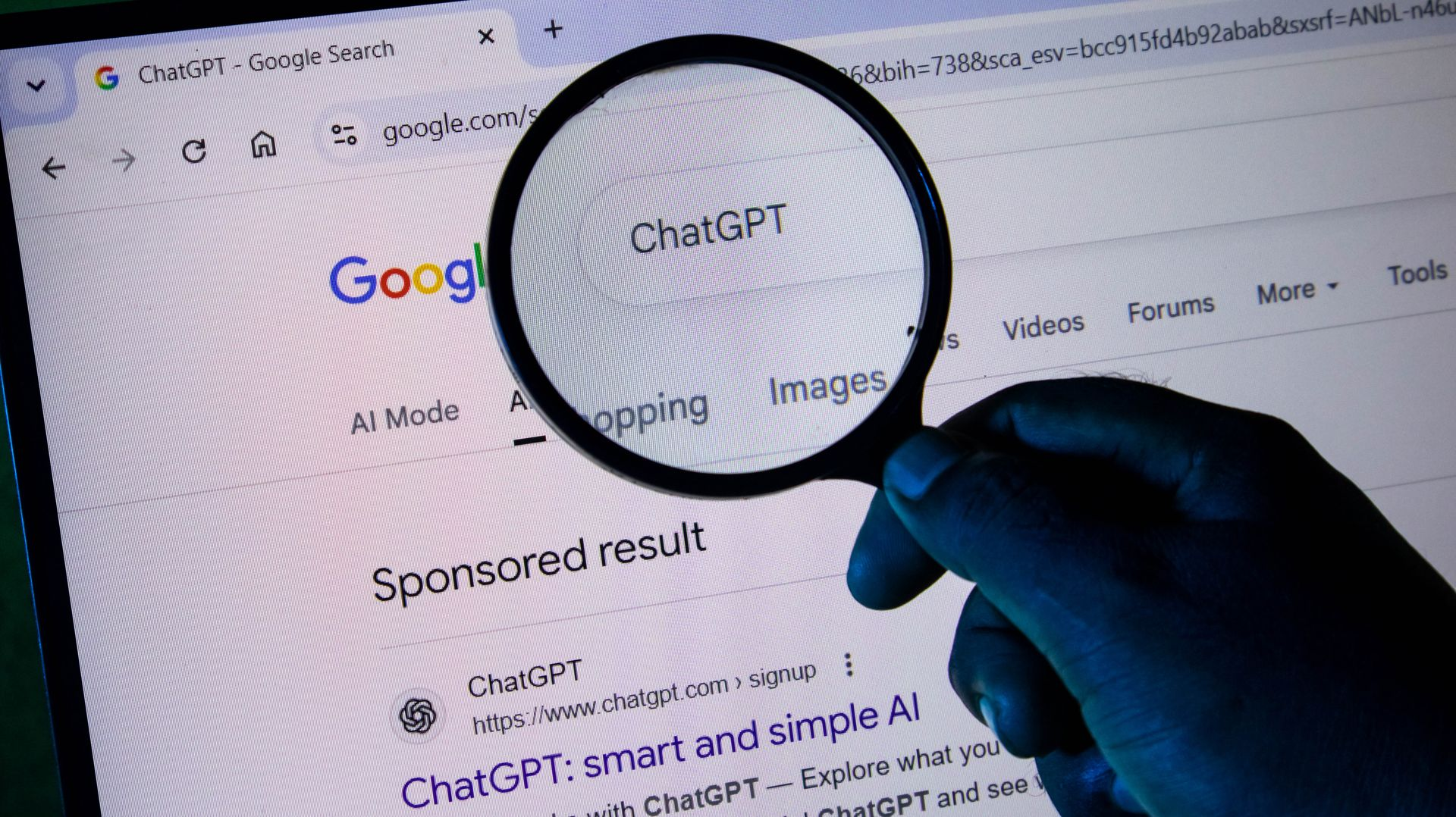
AEO is SEO
By Jared Broussard July 29, 2026
Is AEO replacing SEO? Learn why both rely on the same fundamentals to help businesses earn visibility, trust, and citations in AI search.
The fragmentation of search. Why Being Found Is No Longer Just About Google
By Rikki Broussard July 23, 2026
Your customers are still searching. They are just no longer searching in one place. They may start with Google, ask ChatGPT to compare their options, watch a YouTube video, look for examples on Instagram, read reviews, or open a map to find a nearby business. This does not mean your company needs to chase every new platform. It also does not mean SEO is dead. The best response to fragmented search is to strengthen the foundation you already have. Build a clear, credible website, answer the questions your customers ask, share real expertise, and ensure your business appears consistently on the platforms that matter to your audience. AEO, or Answer Engine Optimization , is part of that approach. It helps search engines and AI tools find and understand your answers, but it works best when it is built on strong SEO . Why Are Customers Searching in So Many Different Places? Customers are searching in more places because they now have more ways to find the type of information they want. Every Monday during our BlinkJar staff meeting, each person brings an industry update to discuss. One recent conversation about artificial intelligence and its impact on search reminded me of what happened to television. Jared, my husband and BlinkJar’s founder , spent years working in television. At one time, a few broadcast networks held most of the audience. Then cable created more choices. Streaming services, YouTube, social video, and on-demand programming divided attention even further. Television did not disappear. People gained more ways to watch. Search is moving in the same direction. A prospective customer may search Google for a service, ask an AI assistant to explain the differences between providers, watch a video to see how something works, and read reviews before visiting a company’s website. The challenge is not that Google has stopped working. It is that businesses can no longer assume every customer will begin there. Does My Business Still Need SEO? Yes, your business absolutely needs SEO as it remains the foundation of being discovered online. Google continues to drive valuable, high-intent traffic for businesses. A strong website also gives AI tools, maps, social platforms, and prospective customers a reliable place to learn who you are and what you offer. Your website needs clear service pages, useful location information, simple navigation, relevant internal links, and a sound technical structure. Search engines must be able to crawl, index, and understand your pages. Traditional SEO is not being replaced. It is supporting a larger discovery ecosystem. Think of your website as your company’s home base. Social media, maps, reviews, search engines, and AI tools may help customers find you, but your website is where you control the complete story.
Kingsley Working
By Kingsley Lavender July 20, 2026
Kingsley Lavender shares what he learned as a marketing intern at BlinkJar Media, including SEO, website updates, content marketing, and real-world agency experience.