

5 Reasons Small Businesses Should be Using Google AdWords (Pay-Per-Click)
It has become a word that just about everyone utters at least once a day. We’ve made it a verb when it is really a noun. In any conceivable circumstance it holds the answer to almost every question we can imagine. So what magical word is this? Google. Not only has this brand created a lofty place in our vernacular it is also quietly spreading its footprint across all things tech and beyond.
Since 2001 Google has spent more than $28 billion to buy 163 companies (essentially 1 each month). Many of these are tech companies you would expect a Silicon Valley juggernaut to have a hand in. Their acquisition portfolio boasts everything from Boston Dynamics, a company that is developing mobile research robots for the Pentagon to DNN Research Inc., a company that is attempting to mimic the processes of the human brain with a computer. However they also have some peripheral assets that seem less obvious. Have you ever heard of the Zagat survey that some of your favorite restaurants may boast about? Google owns it.
Let’s not forget about the self-driving car that Google is developing, or the massive, space-aged design for their Mountain View, California campus. So how much money can a “search engine” make? It seems they are making massive investments into futuristic “toys” whose tangible payoff is still generations away. Well it’s all relative.
I’m sure we’ve all heard those familiar ratios and statistics that Bill Gates (net worth of $79.7 billion) spending $65 million on a Gulf Stream G650 is about the equivalent of someone who earns around $50,000 a year spending $60 on a pair of shoes. Google earned $60 billion in 2014. So those 163 companies have only cost Google about 3% of their revenue each year. Well, that’s a lot of math, but now that the numbers are in perspective and context, the bigger question may be, “how in the world does Google make $60 billion a year?”
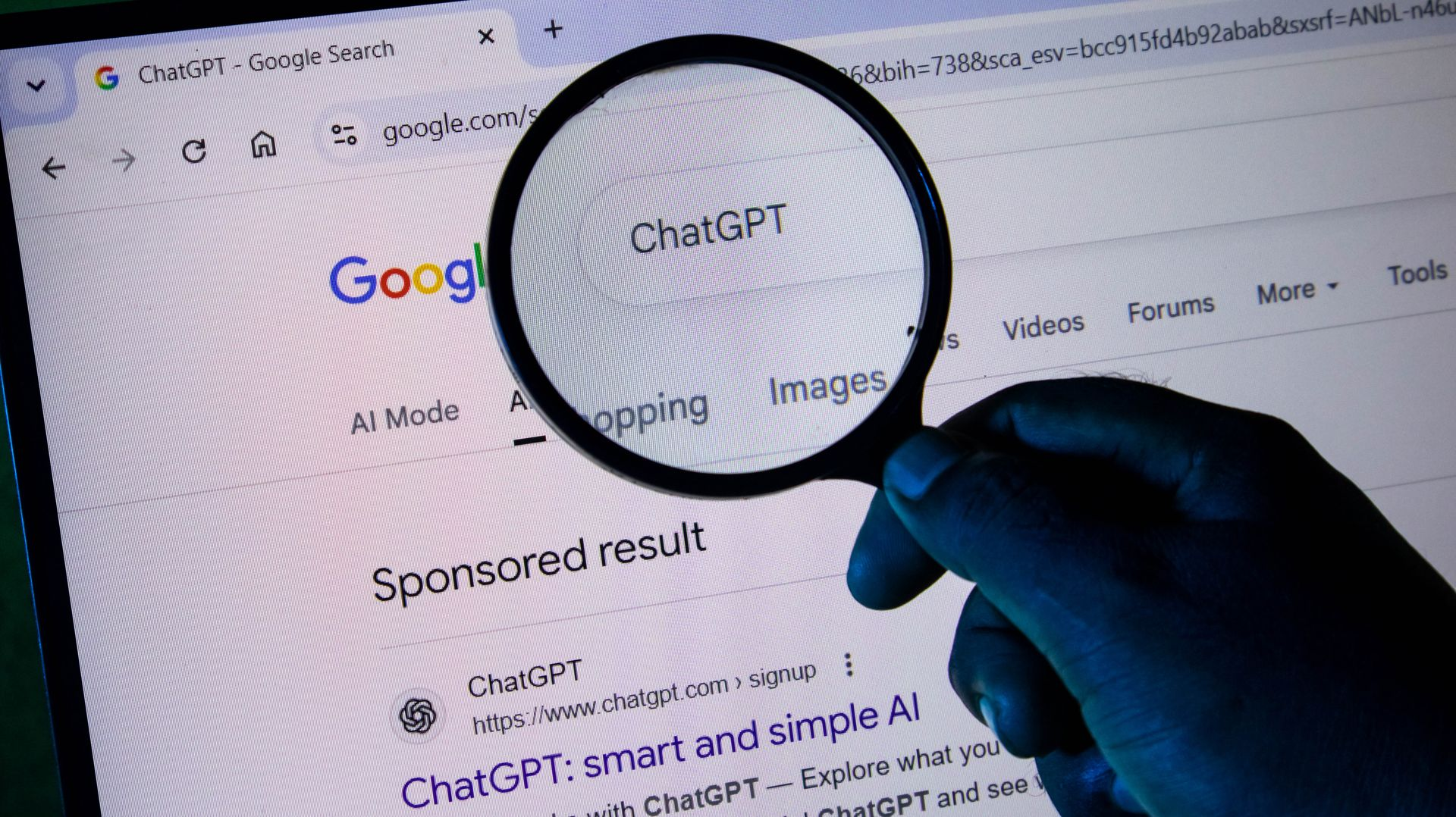
The answer is one word that is made by putting two words together, AdWords, more generally known as “Pay-Per-Click”. Over 96% of Google’s revenue comes from their AdWords platform. We are all familiar with these ads. When you type a search query in Google, the top of the screen and the right hand column all feature results that companies have bid on to get you to visit their site. To Google’s credit, while they are providing a powerful, insightful tool for businesses in a time of increased competition and drastically changing consumer behavior, their focus remains on the user’s experience. The reason is obvious. If their search engine can provide the most relevant, timely, authoritative answer to a searcher’s query, they’ll continue to come back. This principal is universal across all industries. If you need a golf club and you walk into a store with a big sign in front that says “GOLF”, and you can only find soccer balls, you probably won’t visit that store again.
While no one knows the secret recipe that makes up Google’s brilliant algorithm, there are some clear best practices that prove to be effective. We just discussed the biggest one, user intent. This key insight should drive your overall AdWords strategy. This seems like a good time to pump the brakes. AdWords is probably great for the Nikes, Old Spices, Banana Republics and Fords of world, but before we get too far ahead of ourselves, why should small business owners consider pay-per-click (AdWords)as part of their marketing plan? Here are 5 reasons why small and medium sized business owners should use Google Adwords.
• Immediate First Page Positioning: The best place to hide a dead body is on the second page of Google because no one will ever look there. I’m kidding of course; except for the fact almost literally no one wanders beyond the first 10 results that Google brings them. 92% of visitors click on the first page. While search engine optimization and content creation are useful and valuable elements of digital advertising, they take time. AdWords provides an immediate first page position.
• Performance Tracking: John Wannamaker famously said, “Half of the money I spend on advertising is wasted; the trouble is I don’t know which half.” AdWords solves this problem. There are all types of fancy metrics: click-through-rate, conversion percentage, cost-per-click and more. All of these provide you an instantaneous glimpse into the success, or lack thereof, of your digital advertising efforts. These analytics allow you to adjust your strategy and efforts on the fly. Do more of what’s working and do less, or none, of what’s not.
• Type of Branding: Creating a niche in the consumer’s mind is the entire point of advertising. You want to be thought of when they need what you have. Of course you want to the be their first destination as soon as they need or want your product, but you also want to have a spot in the back of their mind even when they aren’t in the market. There are many expensive ways to brand your business: sponsorships, mass media campaigns, etc. However, having an inexpensive web presence on the world’s most powerful search engine can create the same equity. If a searcher is in the top of the sales funnel and not ready to buy, but repeatedly sees your ad over a period of time, when they are ready to purchase, you will be likely be at the top of their list. The beauty is you don’t spend a dime until they click on your ad.
• Reach a Captive Audience: There are billions of searches made online and within social media every day. More and more people are using the internet to find answers and solutions. When your information is present online, you are talking directly to a captive audience. Almost every ounce of waste is eliminated because these people are looking for you, as opposed to you looking for them. To some degree they want, need or are otherwise interested in what you do. At this point you aren’t selling, you are solving.
• Cost Control: You can make the most obnoxious, ineffective commercial that has ever been shot across the airwaves and if the show you are advertising in costs $1,000 a spot, you’ll pay $1,000. You can also craft a cinematic masterpiece that does more than sell a product, it inspires and changes people’s lives, you’ll still pay $1,000. AdWords came up with a neat little thing they call a “Quality Score”. If you create an informative, relevant ad that links to a relevant and informative page that is exactly what searchers are asking for than not only do you get a higher position, you get it at a discount. When you earn a high quality score you can pay less for a better position while your competitors pay more for a lower one. Going back to user intent, Google rewards its advertisers for quality content. Live analytics and budgeting tools also allow you to control how much you actually spend for a given campaign and timeframe. Your wallet, just like your message, is always firmly in your control.
Don Draper, in all of his fictional, yet brilliant glory, said, “Never stop testing and your advertising will never stop improving.” While we all see these ads on a daily basis, understanding the ins and outs of why they are there, what they do and how that tech company with a funny name makes so much money, really puts it all in perspective. AdWords can be an incredibly effective and affordable vehicle for your business, no matter the size. While traditional media will always play a valuable role, the disruption that technology is causing to the way people learn, shop and buy means that businesses need to adapt and respond accordingly. Learn more about how BlinkJar can use Google AdWords to help your business grow.